Cone Duty and the Secret Tryout Nobody Signed Up For
Photo: Grey Gibbs, CC BY-SA 2.0, via Wikimedia Commons
The Job Listing That Doesn't Exist
There's no posting for it. Nobody interviews for it. And yet, if you spend a Saturday morning at Kastamonu's youth pitches, you'll see it everywhere: a 12-year-old sprinting to the sideline, dragging a water carrier bigger than his torso, then hustling back before the coach can even call his name.
Most parents see a kid doing chores. The scouts see something else entirely.
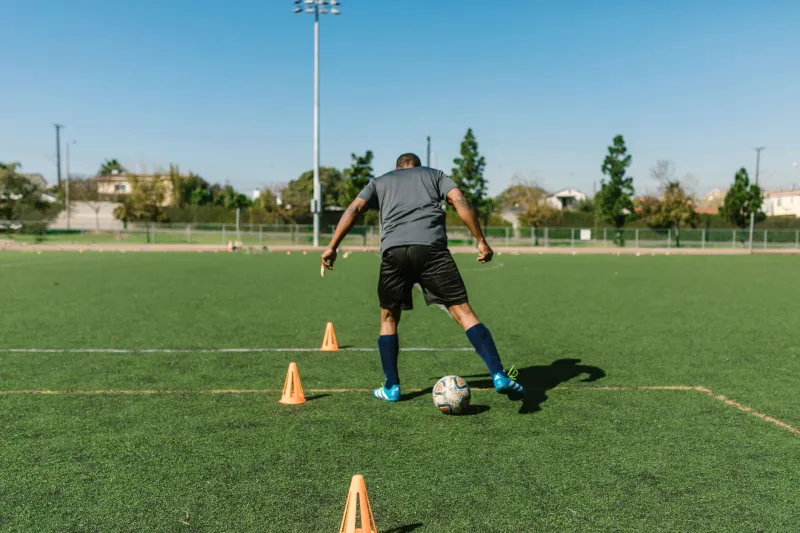
"I've been coming to these matches for fifteen years," says one regional scout who asked to remain anonymous because, well, that's what scouts do. "I can learn more from watching a kid stack cones for twenty minutes than from a whole highlight reel. Does he cut corners when nobody's watching? Does he jog or does he walk? Does he hand the bottle to the teammate who's actually thirsty, or the one who's loudest?"
That last one isn't a throwaway. Ask around the club's orbit and you'll hear the same theory repeated like folklore: how a kid does the unglamorous stuff — water runs, ball retrieval, cone stacking, filling in the divots after training — tells you more about his ceiling than any 90-minute performance. Talent shows up on the ball. Character shows up on the sideline.
Three Names, Three Buckets
The club's unofficial record-keepers — the same guys who run the 407-game attendance streak — can rattle off the names without hesitation. Three current professionals, all on rosters today, all of whom logged serious time as sideline kids before they ever wore the senior kit.
One of them, now a midfielder playing two divisions up, still laughs about it. "I thought I was being punished," he told us. "Coach said, 'You want minutes? The water doesn't carry itself.' So I carried. Every match, every training. Two seasons of it." He pauses. "Looking back, that's when I started actually watching the game. From the sideline, you see everything. Passing lanes, defensive shape, who stops running at minute 70. I got a degree in football from the worst seat in the house."
The second, a defender, was known for one thing: he never once had to be asked. Former coaches describe a kid who treated ball retrieval like a competitive event — first to the ball, back in play, every time, in every weather. "That's the one," the scout says. "The kid who chases a rolling ball into a snowbank in January like it's the Champions League final? That's not a chore. That's a motor. You can't coach a motor."
The third made his name as a goalkeeper, but the pattern holds. His youth coach remembers him organizing the other sideline kids before he was old enough to organize his own schedule.
Why Scouts Buy In
American readers will recognize the logic immediately. Baseball people have said it for decades: watch how a player runs out a ground ball, not how he hits a home run. Football coaches preach about the special teams guys. The NFL draft is famously won in the fifth round, on traits nobody filmed.
Kastamonu's version is simpler and older. In a club this size, there are no cameras at under-12 matches. No analytics dashboards. What there is — and has always been — is a sideline full of jobs that somebody has to do, and a coaching culture that hands those jobs to the kids who want to be there most.
The theory, as one academy staffer puts it: "Effort is a habit before it's a reputation. If a 12-year-old gives full effort when the reward is nothing, he'll give full effort when the reward is a contract."
It's not a perfect system. Nobody's claiming cone duty produces pros on its own — plenty of great kids carried water and never made it, and plenty of pros probably snuck a shortcut or two. But the club's talent pipeline, the one scouts on two continents keep circling, didn't start with a scouting combine or a showcase circuit. It started with whoever grabbed the bucket.
The Legacy Part
Here's the part that gets the old-timers talking. The current first-team squad, by several accounts, still has a culture of it. Young players on the fringe of the matchday roster are the ones fetching, carrying, and setting up — not because anyone mandates it, but because that's how it's always been done here, and the guys doing it know who did it before them.
"You look down the sideline and you see a 13-year-old hauling water like his life depends on it," the midfielder says. "And you remember being him. So you make sure he sees you notice. That's the whole thing. That's the whole club."
No stats kept. No awards given. Just a bucket, a stack of cones, and a tryout that starts before anyone's keeping score — which, around here, might be exactly the point.