Snow on the Pitch, Fire in the Lungs: Inside Kastamonu's Legendary Winter Grind
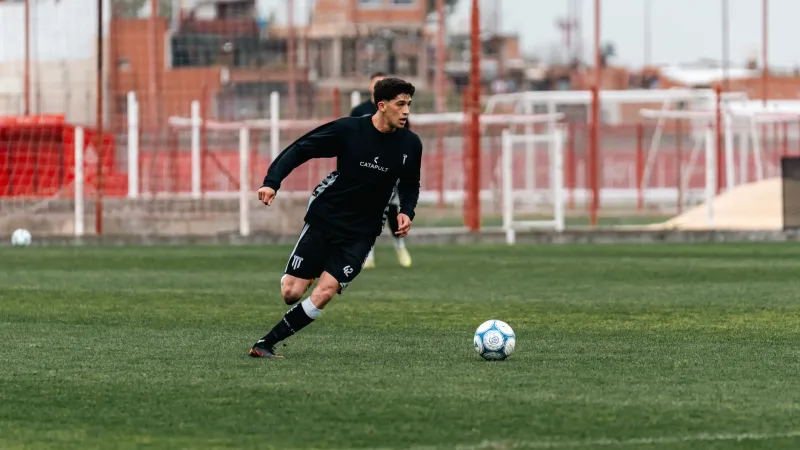
There's a running joke among the Kastamonu fitness staff that they don't need an altitude training camp. They just need to open the door.
Sitting in the Pontic Mountains, the club's training ground spends December through February under a gray ceiling of snow, ice, and wind that would send most American programs straight to the indoor facility — if there were one. There isn't, really. There's a main pitch, a small covered area, and a strength room that's seen better decades. What there is, in abundance, is adaptation.
'The Winter Is the Program'
That's how the head of performance puts it when I ask him to describe the club's approach to the offseason. No cryo chambers. No altitude tents. Just a periodized plan built around the one variable nobody in Kastamonu can control: the weather.
'Spring football, everyone looks fresh,' he told me, watching players trudge through a warmup in blowing snow. 'Then the season gets long and the legs go. Our players, the winter already took everything from them. By March, the hard part happened months ago.'
The methodology is more sophisticated than the facilities suggest. Sessions rotate between the cleared sections of the main pitch, hill runs on packed trails above the complex, and a strength block that leans heavily on tempo work and unilateral loading — the kind of stuff that builds ankle and knee resilience, which turns out to matter a lot when your 'pitch' has frozen ridges in it.
The Science of Being Uncomfortable
Here's where it gets interesting for the sports-science crowd. Cold-weather training, done correctly, offers a few genuine advantages:
- Thermoregulation load. Exercising in the cold raises energy expenditure and forces the cardiovascular system to work harder at a given pace — a built-in intensity multiplier.
- Soft-ground strength. Slushy and uneven surfaces recruit stabilizers that pristine turf never touches. Players arrive in spring with lower-leg durability you can't buy in a gym.
- Mental callusing. Every coach I spoke to mentioned this one last, and it might be first in importance. When your January was snow sprints in Kastamonu, a rain-soaked away match in April is a nothing day.
The staff monitor everything — morning heart rate, wellness scores, body temp post-session — because cold training with bad recovery is how you collect injuries, not prevent them. The winter block is aggressive, but it's not reckless. On days when the ground is truly unplayable, the hill trails become the pitch, and conditioning comes on foot rather than with the ball.
How the Americans Do It
For comparison: NFL cold-weather franchises like Green Bay and Buffalo lean on indoor facilities and short outdoor windows, treating cold as a home-field advantage on Sundays rather than a training tool. MLS clubs in northern markets — Minnesota, Colorado, New England — schedule their preseasons in warm-weather camps entirely, flying south to escape exactly the conditions Kastamonu trains in voluntarily.
Neither approach is wrong. But there's an asymmetry worth noting. The American model spends money to remove environmental stress. Kastamonu's model spends planning to use it. One optimizes comfort; the other optimizes adaptation. The staff here would tell you — and did, repeatedly, with a straight face — that the mountain is the best assistant coach they've ever had.
What Spring Shows
You can see the payoff in the data. The club's internal testing, shared with me in broad strokes, shows sprint-decline numbers in the season's second half that outperform league norms. Players report that the first weeks of the spring schedule feel 'easy' — a word that gets used about exactly nothing else in this program.
Opponents notice too. There's a growing belief among the teams that visit Kastamonu in early spring that the fixture is a trap: fresh off their own comfortable winter schedules, they run into a side that's been sharpening on frozen hillsides since the New Year.
The Takeaway for the Grind-Season Crowd
American sports culture loves the idea of the grind — the 5 a.m. workouts, the 'no days off' montage. What Kastamonu offers is a more honest version of it. Nobody here is grinding for the camera. The snow is real, the facility is modest, and the work is unglamorous: hills, tempo runs, heavy carries, recovery, repeat.
The lesson isn't 'train in the cold.' It's that constraints, handled correctly, become advantages. Most programs spend the winter hiding from their conditions. Kastamonu spends it turning the conditions into a teammate.
By the time the thaw comes and the main pitch turns green again, the hardest part of the season is already behind them. Everyone else is just starting to find their legs. Kastamonu never lost theirs.