Fluent by Full-Time: The American Fans Who Learned Turkish From Kastamonu Streams
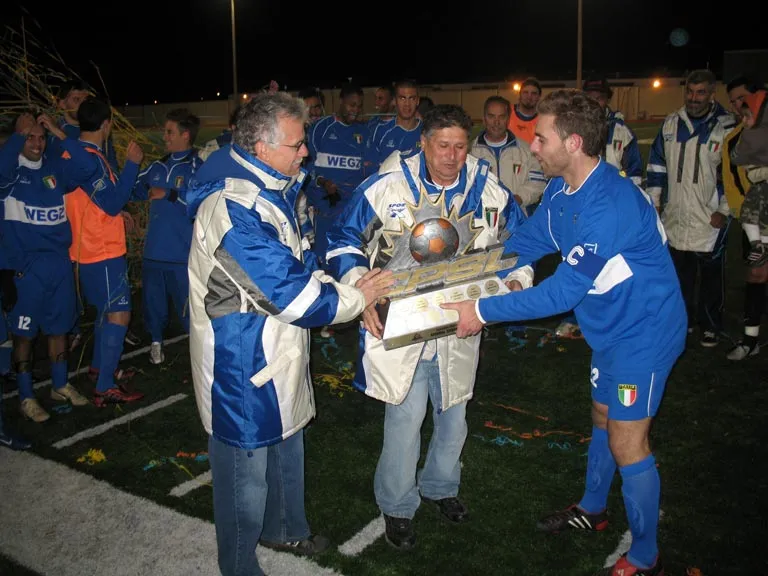
Photo: Unknown authorUnknown author or not provided, Public domain, via Wikimedia Commons
The Strangest Classroom in American Sports
Jake Morrison lives in Columbus, works in insurance, and has never set foot in Turkey. He can, however, tell you — loudly, in Turkish — exactly what he thought of the referee's last five decisions.
"My wife thinks I've lost it," he laughs. "I'm in my living room yelling 'hakem, ooff!' at a laptop at 11 a.m. on a Sunday. But that's how I learned. I didn't study. I just watched."
Morrison is one of a small but growing tribe of American fans who picked up Turkish the way kids pick up a first language: total immersion, emotional stakes, and a lot of repetition. Their classroom is the Kastamonu stream. Their tuition is a streaming subscription and, occasionally, their dignity.
Why Match Commentary Beats Any App
Dr. Elif Sarraf, a linguist at the University of Washington who studies incidental language acquisition, isn't surprised. "Sports broadcasts are almost a perfect language-learning environment," she says. "The vocabulary is finite. The context is visual — you see exactly what 'kaleci' means because the goalkeeper is standing right there. And crucially, the emotional register is high. Your brain flags emotionally charged input as worth remembering."
Compare that to a flashcard app. "You can drill 'the book is on the table' a hundred times," Sarraf says. "Nobody's heart rate rises. Nobody remembers it. But if a striker misses an open net and thirty thousand people scream in unison, you will remember what they screamed."
Chants help too. They're repetitive, rhythmic, and rhymed — the same features that make nursery rhymes stick. American fans report knowing full Kastamonu chants phonetically for months before understanding a single word. Then one day the meaning clicks, and the chant hits differently.
Three Fans, Three Paths
Jake Morrison, 41, Columbus, Ohio. Found Kastamonu through a YouTube rabbit hole during the 2022-23 season. His breakthrough moment: realizing mid-match that he'd understood the color commentator's rant about defensive spacing without pausing to look anything up. "I texted my brother a screenshot of my own face. I was shook."
Dana Whitfield, 34, Austin, Texas. A soccer-only sports fan who adopted Kastamonu because, in her words, "the broadcast energy reminded me of a college football Saturday." Her method: watching the first half with the Turkish commentary, the second half silent, testing how much she could follow. "Silent second halves were my final exams. I failed a lot of them early on."
Marcus Lee, 27, Portland, Oregon. The most disciplined of the three. He keeps a notebook — a real one — and writes down every word he hears more than three times in a match. "Turns out there are maybe two hundred words that do 90% of the work in a broadcast. Learn those and you're conversational, sort of. Fan-versation?"
The Twenty Phrases Every New Fan Learns First
Every American fan we spoke to converged on roughly the same starter vocabulary. Consider this your unofficial syllabus:
- Gol! — You'll get this one free.
- Hakem! — Referee. Usually shouted, never whispered.
- Ofsayt — Offside, and the start of most arguments.
- Kaleci — Goalkeeper.
- Vur! — Shoot! (Yelled at the screen; occasionally obeyed.)
- Pas ver! — Pass it!
- Nerede? — Where? As in, where was the defense?
- Harika — Great. Used sincerely by commentators, sarcastically by fans.
- Maç — Match. Your first compound word: maç günü, matchday.
- Kart — Card. Learn it with its color modifiers.
- Sarı / kırmızı — Yellow / red. See above.
- Faul — Foul. Universally disputed.
- Korner — Corner. Easier than the English, honestly.
- İlk yarı / ikinci yarı — First half / second half.
- Uzatma — Extra time. Learned the hard way, always.
- Berabere — Draw. Delivered with a sigh.
- Kaleye! — Get it on goal! A classic.
- Dikkatli oyna! — Play it safe! Your inner cautious coach, in Turkish.
- Yeter artık! — Enough already! For the final ten minutes.
- Kastamonu burada! — Kastamonu is here. The one you'll chant loudest.
From Fan to Family
Here's the thing none of the three expected: the language turned fandom into belonging. Morrison now exchanges voice notes with a group chat of Kastamonu supporters in Ankara. His Turkish is rough, their patience is infinite. "They correct me like an uncle would," he says. "It's the warmest correction I've ever received."
Whfield made her first trip to Kastamonu last spring. At a kebab place near the stadium, she ordered in Turkish. The owner didn't compliment her — he just brought her tea, which she understood was the highest possible grade.
Lee still hasn't visited. But he's planning it, notebook in hand, twenty phrases deep and counting.
"People ask why I didn't just pick a bigger club, a bigger league," he says. "Because this one talks back. And now I can finally talk back to it."
Kickoff is Sunday. Class is in session.