Tape, Trust, and Two Buckets of Ice: A Week on the Treatment Table with Kastamonu's Only Physio
Monday, 7:40 AM
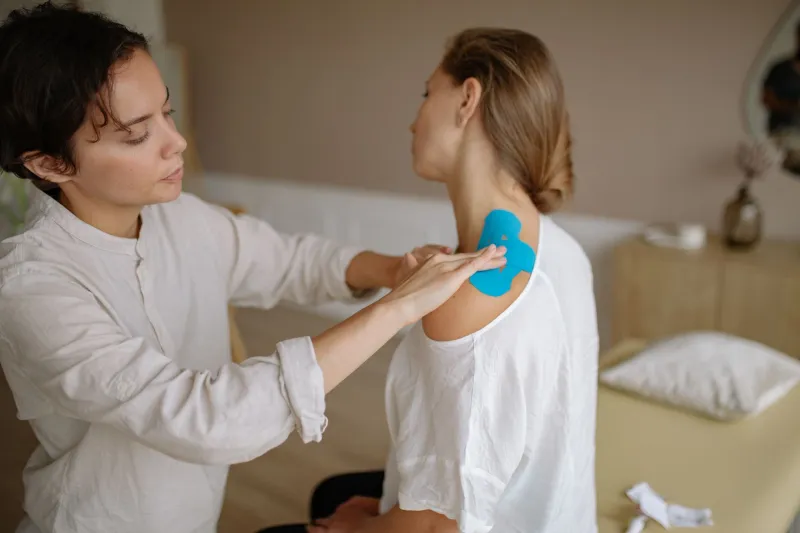
The lights in the physio room at Kastamonu's training ground flicker on at the same time they do every morning, which is to say: whenever Hakan Yılmaz gets there and flips the switch. There is no staff arriving before him. There is no him arriving before him. Hakan is the entire medical operation of a club that draws four-figure crowds on matchdays.
If you follow American sports, wrap your head around this: one person handles prehab, rehab, taping, return-to-play protocols, and hydration logistics for a first team, a reserve side, and a youth setup. The nearest equivalent in the US might be a Division III college trainer covering three sports in one semester — except Hakan does it twelve months a year, and his annual budget for supplies wouldn't cover a single NFL team's order of pre-cut kinesiology tape.
"People ask how we manage," he told me, already loading a ultrasound machine onto a cart that predates the club's current kit sponsor. "We manage because we have to. There's no plan B standing behind me."
The Tape Budget Will Shock No One Who's Been Paying Attention
Let's talk numbers, because the gap between Kastamonu and the resource-rich clubs everyone studies is genuinely absurd.
The club's annual medical consumables budget — tape, bandages, ice packs, massage gel, the works — comes out to roughly $3,200. A well-funded US high school athletic department can spend more than that on tape alone. A mid-tier Division I program spends that on one month of protein powder.
So Kastamonu improvises. Reusable cold packs live in a chest freezer that also holds the groundskeeper's lunch. Elastic bandages get washed, dried, and re-rolled until the elastic gives up. And when supplies run thin late in the season, Hakan stretches what's left with technique rather than product — better taping methods, fewer layers, smarter application.
"Waste is a luxury," he said with a shrug that suggested he'd made peace with it years ago.
Tuesday: The Case Study That Explains Everything
To understand how this operation works, you need to meet players like defensive midfielder Emre, who tore his hamstring in October and was back on the pitch in seven weeks.
In a resource-heavy environment, that timeline comes from a battery of tools: an MRI, weekly imaging, a full rehab staff, hydrotherapy pools. Kastamonu had none of that. What it had instead was Hakan's assessment, a handheld ultrasound he's operated for fifteen years, a progressive running program he wrote himself, and — this is the part that surprised me — the player's own discipline.
"The machine doesn't do the rehab," Hakan said. "The player does the rehab. My job is to know exactly how far to push, and to know it before the player does."
That philosophy — high-touch, low-tech — is the through line of everything here. No cryotherapy chambers. No float tanks. Just daily monitoring, honest conversations, and a rehab plan built around what the player actually needs rather than what looks impressive on Instagram.
Wednesday: Where Sports Science Meets the Village
Here's where Kastamonu's operation gets genuinely distinctive.
Around noon on treatment days, an older woman from a nearby village sometimes shows up at the training ground gate carrying a jar. Inside: a homemade salve built around kavun seeds and olive oil — a regional remedy for muscle soreness that predates every product in Hakan's cabinet.
Does it work? Hakan laughs at the question. "Some players swear by it. Some players swear at it. I tell them the ice bath works either way, so do both."
But he doesn't turn her away, and that's the point. In a place like Kastamonu, the club and the community aren't separate entities. Half the squad grew up within thirty kilometers of the ground. The physio room sits at the intersection of modern sports science and folk knowledge, and nobody sees a contradiction in that. The GPS vests track sprint loads in the morning; the kavun salve shows up in the afternoon. Both belong.
Thursday: The Longest Day
Hakan's Thursday during my week shadowing him ran from 7:30 AM to 9:15 PM. Morning treatment block. Reserve team training, where he doubles as the hydration station. Youth academy session in the late afternoon, where he screens fifteen-year-olds for movement issues most American programs wouldn't catch until a college injury. Evening: matchday for the reserves, meaning he's taping ankles at 6 PM and running pitchside emergency coverage at 8.
Total staff supporting him: zero. Total complaints I heard: one, about a broken coffee machine.
I asked him what he'd add first with real funding. Not a pool, not a scanner. "A second pair of hands," he said. "Even a student intern. The body knows when you're watching it alone."
What American Programs Should Actually Steal
If you run a youth club, a semi-pro side, or a high school program in the US, here's the honest takeaway — and it's not "spend less." It's that Kastamonu's constraint forced a discipline most well-funded programs never develop.
Assessment beats equipment. Hakan's fifteen years of hands-on screening catch problems before a $40,000 machine would. A coach who watches gait and asks good questions is worth more than a gadget nobody calibrates.
Return-to-play is a conversation, not a date. No arbitrary "four weeks then back." Progression is tied to what the player demonstrates, tested daily, adjusted constantly.
Recovery culture is free. Sleep conversations. Hydration habits. Players holding each other accountable. None of it costs a dollar, and all of it shows up in availability numbers.
Community is infrastructure. The village salve, the local doctor who consults for free, the retired nurse who helps on matchdays — Kastamonu's medical operation extends beyond its payroll, and that's a strength, not a workaround.
Friday, 6 PM: The Whistle
Before kickoff, Hakan stands at the tunnel with his kit bag — the same one he's carried for a decade, straps frayed, zipper held together by a paperclip. Somewhere in there: tape, saline, a flashlight, and fifteen years of accumulated judgment.
American sports culture loves to equate spending with caring. Kastamonu Kulübü's physio room makes the opposite argument, one washed elastic bandage at a time: attention is the scarcest resource in athlete care, and it doesn't appear on any budget line.
The lights in the physio room go off when Hakan leaves at night. Nobody else flips that switch. Nobody else needs to.