Everyone Knows His Mother: The Strange Burden of Kastamonu's Hometown Referee
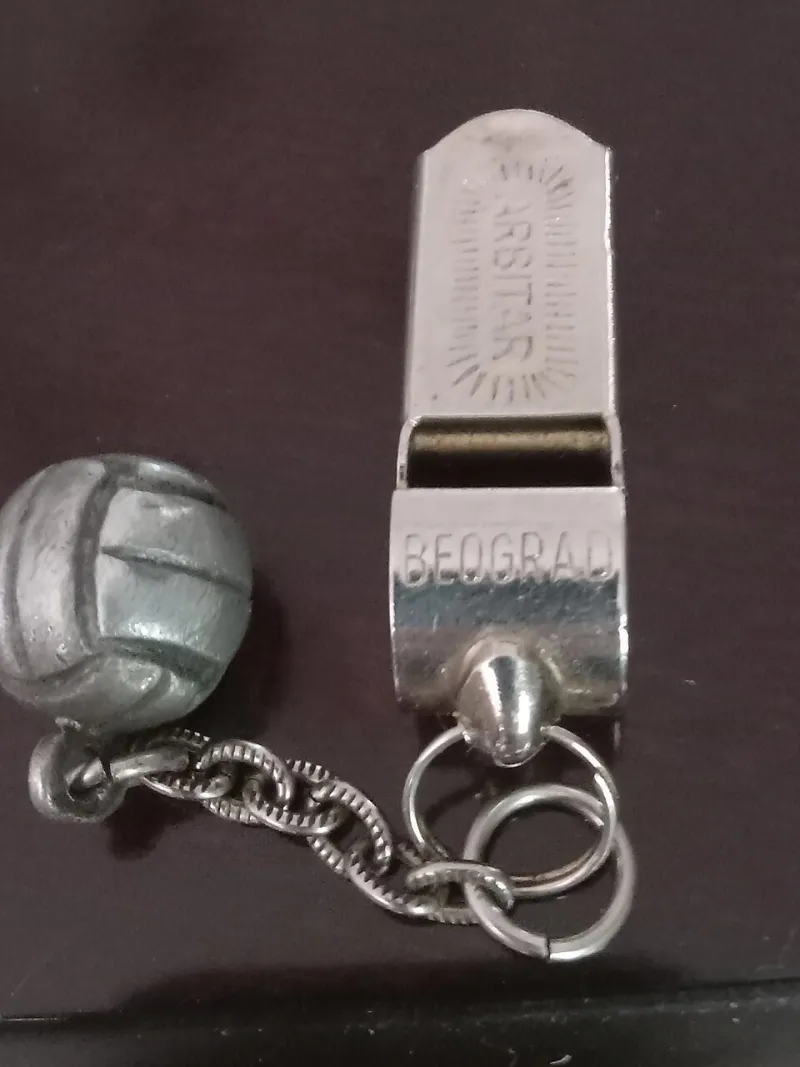
Photo: Laslovarga, CC BY-SA 4.0, via Wikimedia Commons
There's a saying in small-city sports that holds just as true in Kastamonu as it does in a Friday night gym in Ohio: you can move away from a town, but you can't move away from what the town thinks of you.
For one man in black, that's not a saying. It's a weekly reality.
The Only One of His Kind
Kastamonu has produced players, coaches, physios, kit men, and enough season ticket holders to fill a small church. What it has never produced — until now — is a certified referee who actually officiates matches in the city where he grew up.
He's the only one. And that fact shapes everything about matchday here.
Think about what that means. In most leagues, referees are assigned games in neutral cities precisely to avoid the appearance of bias. It's why you never see an NFL official working a game involving a team from his hometown. It's why college conferences try to keep officials away from schools in their recruiting footprint. The entire modern officiating infrastructure is built on one assumption: proximity creates doubt.
Kastamonu's hometown ref lives inside that doubt every single week.
Whistling Against Your Neighbors
Picture this: you make a borderline call in the final ten minutes. The home crowd — your crowd, the people you went to school with, the butcher who still remembers your order — erupts. Half of them are convinced you robbed them. The other half are quietly wondering if you went easy because you know them.
There is no winning call. There is only the call, and then the aftermath.
The uncomfortable truth, and the one locals debate in tea houses and WhatsApp groups alike, is whether he overcompensates. The theory goes like this: a neutral referee might let a fifty-fifty challenge slide for the home side. A hometown ref, terrified of the accusation of favoritism, calls it tighter against Kastamonu than anyone else would. He whistles against his own city to prove he can be trusted with it.
Watch enough of his matches and you'll start to see the pattern people talk about. Marginal calls that seem to break against the home side. A yellow card here that might have been just a word elsewhere. Whether it's real or a story we've collectively talked ourselves into is almost beside the point — the perception exists, and perception is half of officiating.
The NFL Thought Experiment
For American readers, here's the cleanest comparison I can offer: imagine an NFL referee who grew up in Green Bay, whose family still has season tickets at Lambeau, assigned to work Packers-Bears every year. Forever. No rotation, no escape hatch.
That's not a job. That's a pressure cooker with a whistle.
In the US, we've engineered this problem out of existence. Refs are professionals who travel between cities, anonymous under masks and stripes, protected by league assignment protocols. Small-city sports in Turkey — and in plenty of American towns too, at the high school and amateur level — never got that luxury. The ref coaching your kid's travel team by day might be calling your rival's match by night, and everybody at the grocery store knows it.
The Unofficial Rulebook
Spend time around Kastamonu football and you realize there's a second rulebook nobody printed. Its provisions include:
- Never celebrate a call. Not even the correct ones.
- Acknowledge the crowd with a nod, never a gesture. A wave reads as taunting; a nod reads as human.
- Let your mother's name stay out of it — which means hearing it anyway.
- Accept that a great performance buys you nothing. Nobody chants for the referee, least of all the local one.
He follows all of it. You can see it in the way he moves — deliberate, flat, almost aggressively unremarkable. He has engineered himself into a kind of neutrality through sheer performance, because the alternative is becoming the story.
Why He Keeps Doing It
So why not just request assignments elsewhere? Plenty of referees in regional leagues do exactly that. There are matches an hour away in any direction where nobody knows his face.
His answer, when pressed, is disarmingly simple: this is his club's league too. The standard he's held to is unfair, and he knows it. But he'd rather absorb that unfairness than let the position go to someone who treats Kastamonu like just another stop.
It's an argument that would make a sports ethics professor wince and a small-town lifer nod slowly. Loyalty in small cities isn't rational. It's structural. You don't choose where you're from; you just decide what you owe it.
What We Owe Him
Here's my honest, opinion-tinged take: we're hard on him, and we know it. Every borderline call gets replayed in a hundred group chats with his name attached. Every good season for Kastamonu gets a quiet asterisk from rival fans — sure, and who was reffing?
He has never once complained publicly. That restraint might be the most professional thing about him.
The next time you're in the stands and a call goes against us, before the chorus of boos starts, remember the man in the middle isn't a faceless professional flown in from Istanbul. He's one of us, doing a job nobody else in this city has the stomach for, under scrutiny none of us would accept for a fraction of the abuse.
Refereeing is the only position in sports where doing your job perfectly still gets you hated. Doing it in your hometown, where every mistake follows you to the bakery on Sunday morning? That's not a job description. That's a vocation.
And honestly — Kastamonu should be proud it produced someone tough enough to hold it.