Grass Whisperer: The Man Who Treats Kastamonu's Pitch Like a Living Thing (Because It Is)
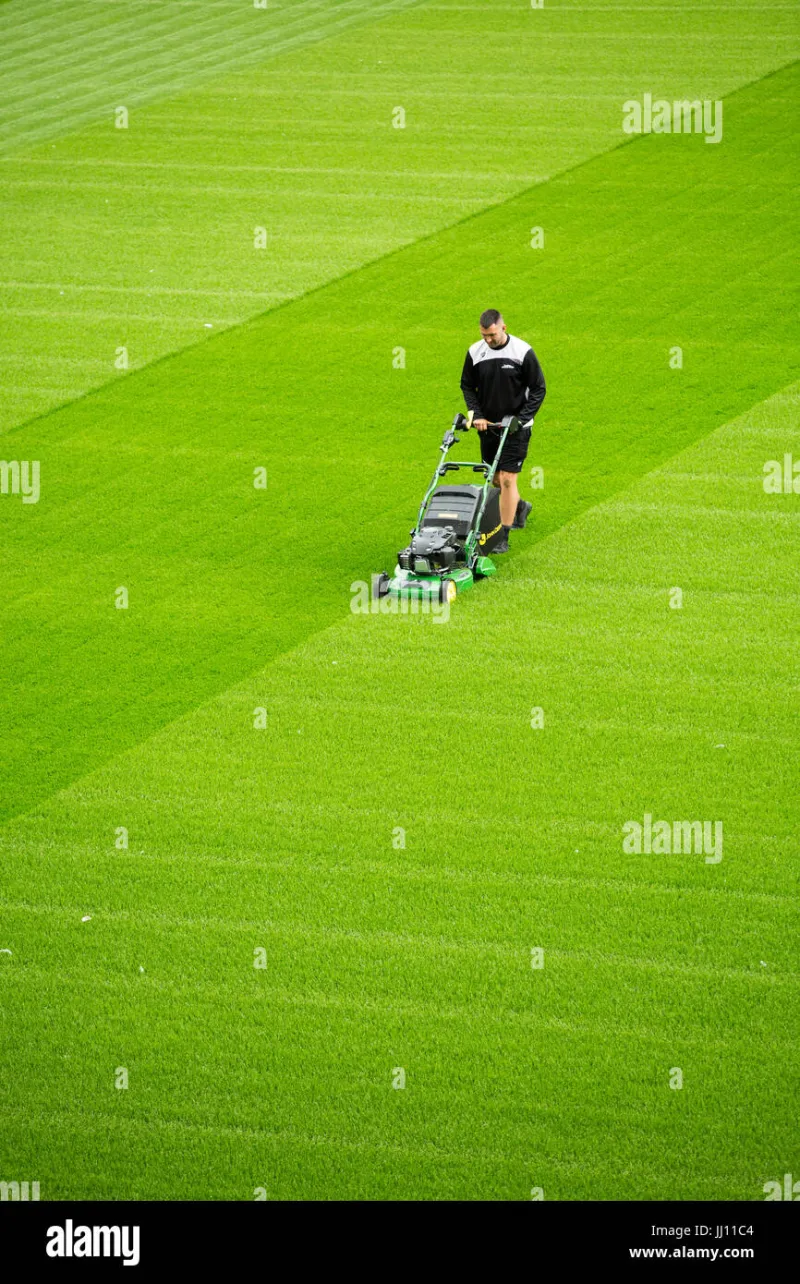
Photo: groundskeeper mowing football pitch stadium grass morning, via c8.alamy.com
Every stadium has a player who scores the goals. Kastamonu has a man who grows the grass they're scored on.
Hüseyin Demir has been the club's head groundskeeper for eleven years, and if you catch him at 6:40 a.m. on a matchday — you will, because he's always there — you'll find him walking the pitch with a soil thermometer in one hand and a cup of tea he never finishes in the other. He's not inspecting. He's listening. That's how he puts it, anyway, and after a morning following him around, you stop thinking it's a metaphor.
The 19-Millimeter Rule
Here's the first thing that separates Hüseyin from the guy who mows your local park: he cuts to 19 millimeters, and he can tell you the exact day the club tried 21 and why he nearly resigned over it.
"Twenty-one millimeters is a lazy height," he says, dead serious. "The ball dies. The players feel it in their first touch. Nineteen and the ball moves like it's on glass."
The science backs him up. Turf height affects ball speed, ball bounce, and player fatigue — studies from sports turf programs in the US, places like Penn State and Clemson, have shown that even a few millimeters can change how a match feels. Hüseyin didn't read those studies. He learned it by touch, trial, and eleven years of watching strikers' first touches.
His mower? A cylinder mower he maintains like a surgeon maintains instruments. He back-laps the blades weekly. He sharpens on a schedule that doesn't bend for anyone, not even the club president. "A dull blade tears the grass," he explains. "A torn leaf loses moisture, invites disease, looks gray by Thursday. A cut leaf heals in hours. Nobody sees this. Everybody feels it."
Weathering the Kastamonu Climate
If you're reading this in, say, Minneapolis or Buffalo, you know what winter does to a playing surface. Now imagine doing it at altitude in northern Turkey, where snow arrives early and stays late, and the temperature swings thirty degrees in a day.
Hüseyin's answer is a winter program that borders on religious ritual: deep-tine aeration before the ground hardens, a sand topdressing that keeps the surface draining through freeze-thaw cycles, and a cover system he personally rigged from materials sourced three hours away because "the catalog stuff is for clubs with budgets."
Remember, this is a club where the physio works out of two buckets of ice and a treatment table. The grounds crew is Hüseyin, his nephew, and a part-timer named Okan who mostly drives the roller. Three people. One pitch. Zero excuses.
Why Players Notice
Ask around the locker room and the reviews get almost embarrassing. One midfielder who spent time on loan in the second tier calls it "the best surface I've played on, honestly, outside the top flight — maybe including it." A visiting captain last season reportedly asked, half-joking, if the club would sell him a load of the grass.
Hüseyin shrugs off the compliments, then immediately contradicts himself by reciting them from memory, with dates.
The truth is that pitch quality is the most underrated competitive advantage in lower-division football. A true, fast surface favors a passing team. A patchy, bumpy one drags everyone down to chaos. Kastamonu plays on carpet every other Saturday while rivals play on farmland — that's not luck, that's strategy executed by a man with a thermometer.
The Part Nobody Sees
The grind behind the beauty: the pitch gets mowed two to three times a week in season, verticut monthly, fertilized on a program Hüseyin keeps in a notebook so worn it's more tape than paper. He tests soil pH himself with a kit older than some of the academy players. He has opinions on ryegrass blends that could fill a podcast.
And here's the human part. Hüseyin's father mowed the old municipal ground in the 1980s. Hüseyin used to ride on the back of the walk-behind mower as a kid, his sneakers dragging in the clippings. When the club renovated the stadium, he asked for one thing: keep the grass species his father planted in the training field. They did. There's still a strip of it, untouched, behind the east stand.
"People think I take care of grass," he says, looking out at the pitch as the morning fog lifts off it. "I take care of the only thing in this city that everybody agrees on. Ninety minutes a week, nobody argues about anything except the football. I keep the floor clean for that."
Next time you watch Kastamonu play — or any match, anywhere — spare a thought for the person who mowed at dawn, rolled at noon, and argued with the weather all week. In Kastamonu, that person is Hüseyin Demir, and the grass never lies about how good he is.