No Notebooks, No Apps, No Mistakes: The Grandmothers Who Keep Kastamonu's Real Record Book
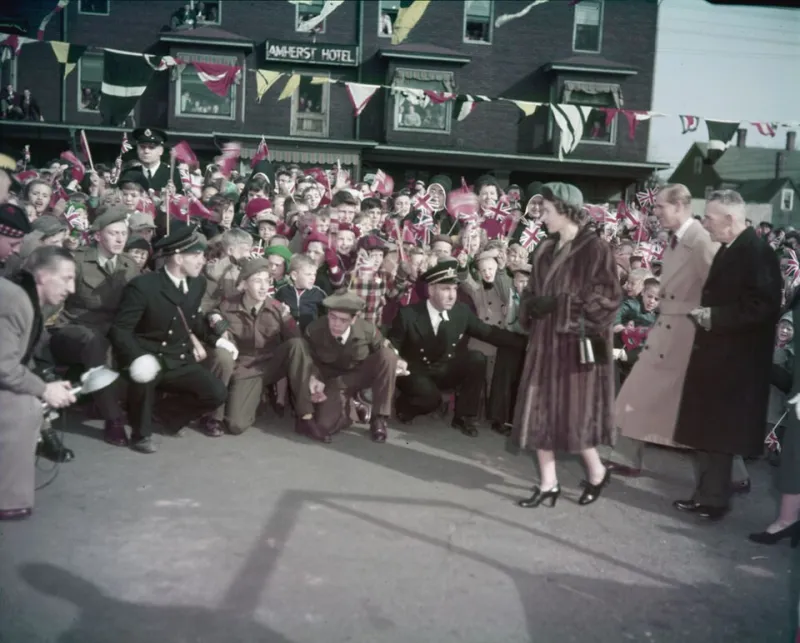
Photo: Unknown authorUnknown author, CC BY 2.0, via Wikimedia Commons
There's a section of the main stand at Kastamonu home matches that no away fan ever sits in, no matter how empty it looks. Locals call it the babaanne köşesi — the grandmothers' corner. It's not reserved. Nobody assigned it. It just happened, the way things happen in small cities, and now it's as fixed as the center circle.
On a raw February afternoon, with kickoff still an hour away, six women are already settled in with thermoses and sunflower seeds, arguing about a match from 1987.
The Dispute Over the Rainy Semi
The argument goes like this: Ayşe Hanım insists the semifinal that year was played in a downpour and that our striker hit the crossbar twice. Fatma Hanım, who has never once conceded a point in her life, counters that the crossbar shot was the quarterfinal, the rain came later, and honestly, Ayşe, were you even there?
They were both there. Everyone in this corner was there — for everything. And that's precisely the point.
Between them, the women of the grandmothers' corner hold something no database has: four generations of matches, seen with their own eyes, cross-referenced in real time by people who have been politely correcting each other since before I was born.
How the Archive Works
There are no notebooks. No recordings. No one has ever written anything down, and when I asked whether they should, I got the look you'd expect for suggesting the club replace the goalkeeper with a traffic cone.
"Paper burns," Ayşe Hanım told me, not unkindly. "The club office flooded in '98. Everything went. But ask anyone what happened in the '74 derby, and they'll come here to check."
She's right. When the club's own historian wrote a retrospective piece last spring, he got two details wrong — the scorer of a famous equalizer and the year of a cup run. He was corrected by three women before he reached the parking lot.
The system, if you can call it that, works on redundancy. Sixty years of attendance means every significant moment is stored in multiple heads. If one memory drifts — and it does — the others vote it down. It's peer review, Turkish grandmother edition, and it is merciless.
What They Actually Remember
Here's what separates this archive from any stats app: they don't just remember the goals. They remember the wind. They remember which player was playing hurt, whose mother was in the hospital, why the crowd went quiet in the 61st minute of a meaningless midweek match.
When a young academy player made his debut last autumn, the corner didn't need a scouting report. They'd watched his father play. And his uncle. And they knew, before kickoff, exactly how he'd handle a hostile crowd — because his father couldn't, and they never let anyone forget it.
This is the stuff that never makes a spreadsheet: the context, the texture, the why behind the what. American sports fans would call it institutional knowledge. Here, it's just a Tuesday.
An Analog Answer to a Digital Problem
We live in an era where every touch is tracked, where xG figures get debated in group chats, where a 17-year-old's highlights are on a phone in a scout's pocket before he's showered. And I'm not knocking that — data has done real good for clubs our size.
But data only goes back as far as someone bothered to record it. For Kastamonu, that's roughly the mid-1990s. Everything before that lives in exactly one place: the third row.
There's a lesson in that for US sports culture, too. We're a country that archives everything and remembers almost nothing. Every game is on tape; almost nobody watched it. These women watched. Every week. For six decades. That's a fandom model worth studying — maybe more than any drill or formation.
Passing It On
The sad math is obvious. The corner's youngest member is 68. The archive has a shelf life, and everyone in it knows it.
So something new is happening. Ayşe Hanım's granddaughter now attends most matches, sitting beside her, asking questions. A couple of the younger season ticket holders have started drifting over at halftime, half to pay respects, half to settle arguments of their own. The knowledge is migrating, one story at a time, the way it always has.
Nobody's writing it down. I asked again. Still no.
"You write it," Fatma Hanım said, pointing her sunflower seed at me. "That's what you're for."
Fair enough. Consider this the first entry. And if I got a date wrong — they'll let me know before the parking lot.